Box 1

Box 1
STEAM

Box 2

Box 2
Character Education

Box 3

Box 3
Digital Learning
Showing posts with label SEL. Show all posts

Bring Back the Zen Classroom


Full Moon ahead? Major school break coming up? Too much excitement for students in the class before yours, or on the bus ride to school? Yikes! That could mean that your day is set up for major headaches, much waiting for quiet and attention, and a constant struggle to get through the lesson plan.

But what if you could bring an atmosphere of calm and peace to your classroom each and every day, no matter what may be happening just outside your door? Welcome to the Zen Classroom! Here are some easy-peasy ways to bring back the calm and get on with the learning:

Of course, we all have heard of brain breaks, and many teachers are already making great use of brain breaks and brain gym activities on a regular basis. I'm wondering if you've tried just breathing at the start of a lesson, after a transition, or when things get a little out of control. You can bring your class right back to center and focus with just a minute or two of focused breathing. Have a sign ready that says, "Breathe". Have a pre-agreed posture that kids automatically get into because they've learned it. It can be sitting up straight in their chair, criss-cross applesauce on desktops, or on a pre-designated spot on the floor. My students often enjoyed taking a seat on the floor under their desks to find a quiet personal spot.

When the sign is displayed, students can engage in one of several types of breathing. Simple and slow  in through the nose and out through the mouth, one of many yoga breaths than can be learned and at the ready for these moments, or whatever breath helps each child to slow down and get calm. Different kids will have their favorites, and one or two that will work best for them.

Just a minute or two spent breathing in this way will restore peace and calm to each student in your class. Because I love you, and because I really want you to try this, here's a free poster for you! Just click, download and print!


Try setting up a yoga poster or two at each of the stations (math, writing, etc.) in your class. Set up a routine with kids that before attempting each academic station, they will practice a pose and/or a breath. Kids and you will see a definite upswing in success, I promise! It's just a great way to clear your head and to save a space in your brain for the learning to sink in. Try it with those dreaded times tables or even a passage from Shakespeare! You just may be surprised!

The most wonderful benefit of starting some of these practices with your kids is that they are truly life practices. Kids will remember and even automatically start breathing or assuming certain positions in stressful or difficult situations or even when preparing for a test, first date, or job interview in the future. You will have given your students a gift for a lifetime by starting some of these habits now in your classroom.

Here's another great use for those yoga posters or yoga cards!
Set up a series of yoga mats, or bath/beach towels, or just areas marked off by tape around your room (or playground!). Place a yoga card/poster at each area. connect the course with yoga straps stretched out (or tape) or yoga blocks laid in a row (can also be stepping stones from the garden or paper stepping stones). I love to use paper stepping stones with messages written on them like, "Just Breathe!" or "Find Your Focus!" or "Be Calm!" or even "Chill!" Laminate them and tape to the floor or ground. Instruct students to follow the paths you have set up from station to station where they will  spend from three to five minutes practicing the postures and/or breaths posted there.

If you make setting up the obstacle course a class job, it will be a very easy and short setup for you, and a yoga obstacle course can be done as frequently and easily as a brain break. Definitely try it outdoors in the Spring for a calm and organized recess with a purpose!
Individual sets of yoga pose and breath cards in each student's desk make it possible for individuals to use these relaxation techniques whenever the need arises. That might not be at the same time for every student! When students have quick access to visual cues, they can try out some new or trusted poses or breaths whenever they need them. A new way of redirecting behavior for you just might become, "Try a card!"

Try hole-punching and adding a "ring-it" to individual decks. Kids can cut out the cards, hole-punch, and assemble themselves in third grade and above. Don't make more work for yourself by creating all the decks yourself when kids can give some zen back to you by doing it themselves. (Of course, cutting and assembling does have its rewards. Try binging on Netflix while cutting!)

 In my classroom, a very popular volunteer position was "CPA Parents". These wonderful (usually full-time working) parents would check their kids' backpacks each night for bags of materials from me to "Cut, Paste, Assemble" (CPA). All the work would usually be completed that evening and returned to school the next day. It's like having a team of fairy godmothers and godfathers just waiting for you to make a wish! Bibbidy-bobbidy-boo! It's an easy way for parents who must work, but want to volunteer in the classroom to take part.

Coloring books and zentangles of all kinds have been increasing in popularity for several years now, and it's no wonder! Focusing in on coloring changes your breathing and is a calming and restorative practice for kids and grownups alike. Using different colored pencils, crayons, markers, and even touches of watercolor adds to the experience. I love using coloring pages with a message. Kids will internalize the message as their fingers make strokes inside and outside the lines. Try printing posters (your choice - make them yourself or make it easy and purchase some) in black/white or grayscale for kids to color in. You can add to your classroom decor with posters personalized by your students. A win for all!

I hope that some or all of these suggestions will help you to create the kind of space in your classroom that will make you feel peaceful and happy while traveling to work to each day, looking forward to teaching and learning as you have always hoped it would be!

You might find some of the resources in these two bundles helpful in your journey to zen:


f I can do anything else to help make your job easier this year, please let me know in the comments below! If I use your idea for a new blog post, you will win a TpT $10 gift card. If I create a new resource for Rainbow City Learning based on your idea, you will win a free copy of that resource to use in your classroom! (Note: all comments are reviewed before appearing on my blog. It may take a few hours for your comment to appear! Thanks for your patience!)


If you would also like to be a part of Teacher Talk, we are a group of teacher bloggers who share posts that are heavy on the ideas with just a little selling of our educational materials at TeachersPayTeachers.com.  For more information about joining The Best of Teacher Entrepreneurs Marketing Cooperative, go to https://bit.ly/3o7D1Dv.  Feel free to email me at retta.london@gmail.com if you have any questions. 


For more Spring classroom ideas, don't miss these great posts:

You are invited to the Inlinkz link party!

Click here to enter
0

The Beauty of the Buddy Bench

When I was six years old and walking to my new school where I didn't know anyone, I heard a voice from across the street: "Hi! My name is Gloria! Will you come to my birthday party tomorrow?"  My new very outgoing little friend introduced me to all of her friends, and all the anxiety of starting at a new school vanished! We became fast friends for many years following.

When I was a junior in college, my sorority decreed that we ALL needed to attend a fraternity party that we were invited to as a group. Nervous and somewhat annoyed at being forced to attend, I walked into the party with my friend Susan. The most adorable boy greeted us, took my arm, and said, "Didn't I meet you before?" It was a corny beginning, but we celebrated our fifty-first wedding anniversary this year!

Each time I began teaching at a new school during my teaching career, there was always a smiling face in the next classroom, or across the hall, ready to become a lifelong friend, and to teach me the ropes of a new, unique situation.

Entering a wedding shower for my friend's daughter, she told me to "sit anywhere". I looked around the room, and whispered (I thought) to her, "I don't know anyone here." Immediately, a sweet and adorable cousin of my friend (someone I had hadn't met yet) appeared at my side and said, "I'm Terri. Now you know me. Sit with us!" Terri is one of my favorite people to this day!

At funeral this week for a dear friend, my husband and I were sitting alone and really feeling the sadness. The man in front of us turned around and started making jokes with us. I said, "Do we know you?" He said, "You do now. I'm Jack, and this is my wife Pat. Now we're friends."

This week's funeral encounter made my mind travel back to all the other times in my life when I was sad or alone, and a stranger became a friend. As a teacher, I always tried, and sometimes struggled to make this magic happen for my students. I knew that, for kids, friendship doesn't always come just by getting them together at recess or in collaborative groups. That's where the Buddy Bench reports for duty.

The Buddy Bench
What is a Buddy Bench? This concept has been around since 2013, when a second grader came up with an idea for lonely kids at recess time. The Buddy Bench doesn't even have to be an actual bench, but it does have to be an agreed upon meeting place. When a child sits on a Buddy Bench, it sends a signal to others that he/she/they would like to interact with someone. This could mean just talking or joining in a game. It's a great way to promote inclusion and to build empathy. I'm all for anything we can do to build kids up from the inside out. The Buddy Bench is relationship and SEL magic!

The secret to success with your Buddy Bench is to discretely teach what it's all about and to model using it. When we installed one at my school, I discovered that the very kids who needed it most in order to find companions at recess were the kids who lacked skill in interpersonal communication. (Anyone surprised?) That's when I developed a set of cards that could be laminated and left at the Buddy Bench to serve as conversation prompts. You can make your own or find them for outdoor use here and in classroom use here, but the important thing is to practice using them. Select a topic and try a model discussion. The topics on my cards all center on finding some common ground on which a friendship may be built.  What are your favorite kind of movies? Music? Ice cream? What do you like to do best at recess? What's your favorite joke?  You get it!


The Permanent Buddy Bench  

Your Buddy Bench will be a fixture on your playground. Our PTA even added a second one right outside the office for indoor recess. Kids will use it to signal that they would rather not spend  recess alone, and other kids will join them. They will find something something to chat about, and may move on to a soccer match, a jump rope game, or a race around the track. They may even find a quiet place under a tree to read a book together. As a teacher (or recess supervisor), you need to kind of watch the bench out of the corner of your eye. If a kid has been sitting there for too long, either encourage a child (that you have pre-arranged a buddy position with) or go and sit there yourself. Start up a conversation. No one wants to put himself/herself out there as being all alone, and then stay that way.

My favorite nine year old told me today that the Buddy Bench at his school is just a place to throw your coat if you get too warm at recess. He went on to say that since everyone at his school is already such good friends with everyone else, the Buddy Bench isn't used anymore. My dad had an expression for that which, in translation, means, "It should always be so." I swear I heard his voice telling me that when I heard about this repurposed Buddy Bench! My wish for you is that yours becomes a coat holder as well!

In any case, your Buddy Bench should become a familiar sight and a familiar concept to your students. It's their signal to be good people and to include others whenever possible. How lovely to sit on the Buddy Bench on a perfect Spring day and chat with a new found friend! Sigh.

From an unknown source, here is a testimonial to the beauty of the Buddy Bench:


Wishing you peace, friendship, and a classroom full of good people!


For more fall ideas, please check out the fabulous bloggers of Teacher Talk! 

If you would also like to be a part of Teacher Talk, we are a group of teacher bloggers who share posts
that are heavy on the ideas with just a little selling of our educational materials at    TeachersPayTeachers.com.  For more information about joining The Best of Teacher Entrepreneurs Marketing Cooperative, go to https://bit.ly/3o7D1Dv.  Feel free to email me at retta.london@gmail.com if you have any questions. 


You are invited to the Inlinkz link party!

Click here to enter
0

Brain Breaks Bring More Effective Learning


I'm sure that you've heard of brain breaks, and may be using them right now in your classroom, but do you know why they are so effective as a learning tool? NIH (National Institutes of Health) scientists have found that during periods of wakeful rest, like the time spent doing a brain break activity, the brain actually replays the last new learning experienced over and over in a process called neural replay, making sure that it sticks. They found that wakeful rest is just as important as repeated practice in acquiring new learning! Seriously, I was today years old when I learned this! I've always known that kids need brain breaks throughout the day, but was not aware of the huge impact that these wakeful resting activities actually have on learning. Sign me up as an even bigger fan of brain breaks now!

Armed with our increased understanding of the importance of brain breaks, I thought it would be fun to review a few of my students' faves in this post!

The Conversational Opportunity

This, by far, has always been the top choice of my students when they are asked to vote on brain break activities. It's simply a chance to talk with others. Easily implemented, it can be a followup to something new that you've just been teaching, or it can be a remedy when students appear to be restless and start talking on their own. You can hold up a sign or just announce that it's time for a conversational opportunity. Set a timer or just say, "Take five!" and you time them for five minutes. Three to five minutes has always been the perfect interval in my classroom. 

I like to ask for volunteers to share what they talked about during this opportunity, and have been surprised and delighted to hear that many times the kids have been discussing the new learning! Just another way to lock in that learning!

Take a Deep Breath

Sometimes, just stopping to focus on breathing for a few minutes is all we need! Try standing up and breathing in for a count of five and breathing out for a count of five. You could use a count of two for the inhale and a count of four for the exhale. Try my Yoga in a Snap Cards for several more breathing techniques.

You can announce your stop and breathe session with either of these two free posters from Rainbow City Learning! 


Strike a Pose!

Getting into a Yoga pose and holding it for a minute or two is a great wakeful rest for your brain. Try a pose that all of your students may be familiar with, such as downward dog or tree pose, or choose a card from Yoga in a Snap Cards.

Dance Break!

This one works great as a conflict resolution technique as well as a brain break. Just announce, "Dance Break!" and start a favorite song on your playlist. Have that playlist ready on your teacher computer our your phone. No one can stay angry when they are dancing. Smiles will spread, tension will disappear, and the most recent learning will be playing on a repeat loop in the resting brains of your students.

Compliment exchange

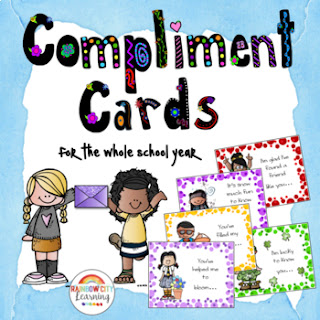
Hand out some compliment cards and give students five minutes to choose another student to compliment by writing on the card and then delivering it. Afraid that some will be left out? Have some pre-addressed cards ready to go!

A compliment card can be on any scrap of paper, or you can find some fun printables here:


I hope you will  enjoy trying some of these brain break ideas to make learning more fun and effective every day! I would love to hear about other brain breaks that you already have in use. Please use the comment section below to tell me about your practice! 


For more ideas to try this month, please check out the fabulous bloggers of Teacher Talk! 

If you would also like to be a part of Teacher Talk, we are a group of teacher bloggers who share posts that are heavy on the ideas with just a little selling of our educational materials at TPT. For more information about joining The Best of Teacher Entrepreneurs Marketing Cooperative, go to https://bit.ly/3o7D1Dv.  Feel free to email me at retta.london@gmail.com if you have any questions. 

You are invited to the Inlinkz link party!

Click here to enter
1

Recipes for the Holiday Season


My family is taking another break this year from our annual Thanksgiving reunion. The pandemic sidetracked our celebration, and this year we just couldn't get it together in time. No recipes were needed for this particular holiday, as we had it catered in a hotel ballroom in the town where we all grew up. We will be Zooming for another year, and hubby and I are planning what to cook for just the two of us. 

My insomnia, aided by the helpful blog fairies, has my brain spinning this morning with recipes of all sorts: recipes for each of the upcoming holidays this year, recipes for self care, and recipes for a happy and successful classroom. I'm also in search today of ingredients for my newest kitchen passion, Korean cooking. Looking for bean paste and chili crisps for some culinary fun before turkey prep begins in earnest!

I love love love to cook! Adding that as a fun ingredient used to be an integral part of my classroom. The rise of peanut allergies and warnings about viruses put an end to that. Any good cook knows that ingredients can be subbed out and that recipes can still be shared with students and their families to be tried at home. I coauthored a book with my forever friend Fay, and we used to cook up a storm in sessions at conferences. Our lesson plan recipes  combined Science, Technology, Reading, Engineering, Art, and Math long before anyone had ever heard of STEM, STEAM, or STREAM! Maybe you attended one of our packed sessions! It was a fun time! 

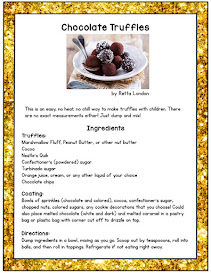
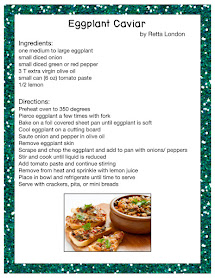
Here are a few recipes to get you through the holiday season with your energy, humor, and love of family and teaching intact!

A recipe for teacher self care:
  • Gather up a few hobbies or things that you just enjoy doing, and deliberately put them into your schedule. I would choose reading and knitting. give them a value of one hour or 30 minutes each day, and make them as important as a doctor's appointment. They ARE as important!
  • Spend some time with friends. Lunch or coffee, shopping, long walks,  whatever you enjoy doing together. Again, give it a spot on the schedule and honor its value.
  • Add a new practice to your self-care routine: yoga, meditation, bubble baths, audiobooks or podcasts. Find a quiet, inward-facing thing that you like to do.
Some recipes to use this holiday season:


A recipe for a Calm and Successful Classroom:

Try these resources from Rainbow City Learning.

ZEN CLASSROOM              

Wishing you a peaceful, calm, and fun holiday season! 


For more November ideas, please check out the fabulous bloggers of Teacher Talk! 

If you would also like to be a part of Teacher Talk, we are a group of teacher bloggers who share posts
that are heavy on the ideas with just a little selling of our educational materials at    TeachersPayTeachers.com.  For more information about joining The Best of Teacher Entrepreneurs Marketing Cooperative, go to https://bit.ly/3o7D1Dv.  Feel free to email me at retta.london@gmail.com if you have any questions. 

You are invited to the Inlinkz link party!

Click here to enter
2

Finding Life Mentors in Mentor Text

Atypical on Netflix

The post below is another blast from the past, and it's been on my mind lately. As my honey and I have been setting up our home for the next chapter, we sink exhausted into the couch each evening and have been binging on "Atypical" on Netflix. As we watch, we often pause the show and discuss. (We do this with most shows we watch - he's been married to a teacher for too long!) We ask each other if we can identify at all with each of the unique characters in this brilliant portrayal of a neurotypical family living with a family member who is on the Autism Spectrum. 

Our favorite character is Sam, who is the family member on the Spectrum. I have always had students who were on the spectrum mainstreamed in my classroom. This was not because I had specialized training, but because I had the heart to connect with every student. Making a personal connection has always been job one for me. Sam is a life mentor for me as I watch "Atypical". As someone with an over the top reeling imagination, I love the clearly black/white manner in which Sam views the world. He reminds me to slow down and realize that different people react to the very same situations in very different ways. 

Watching "Atypical" each evening has also reminded me of the many forms that Mentor Text can take. Characters in TV shows and in movies, even in songs, can all be life mentors for us in so many ways. I hope you will enjoy reading the post below, and will find something useful to take back to your own classroom this year! 

Here it is:
I've been thinking a lot about mentor text lately. Mentor Text. Another piece of education-speak. Sounds official, important, and perhaps a bit daunting for a new teacher or a seasoned one like me, who may not have attended a training or researched  the term. The first time I heard the term, it sent me running to Google for a definition. I found that mentor text is a piece of literature that teachers and students can study, imitate, and apply to other texts and for different purposes.

Wait! What? So using mentor text is the same thing that I (we) have been doing for years: teaching a reading or writing strategy by using a picture book or short piece of text as a model or example. So my favorite mini-lesson practice of starting with a picture book or a passage from a favorite author is using mentor text? Yes! Got it!

As with all trends in education and in life, this idea of using mentor texts in the upper elementary classroom has me asking once again.... What if? What if, as we work through a text to determine a character's motivation and emotions, to learn more about a character, might we also learn a little more about ourselves. I think we might! Think back for a minute to some of your all-time favorite characters from your own reading and/or movie and tv viewing. What if we could apply the positive character traits and emotional intelligence that we find in character study to our own lives?

My greatest personal life mentor was my Aunt Harriet. I was born three days before her eighth birthday, a fun birthday present for a little girl. She gave me countless gifts as my guide through life as we grew up together. She was out-going, chill, fun, and loved to learn and try new things. She was beautiful and a great dancer and baton twirler, to name just a few of her talents. We went to the library together every week and she helped me to pick out books, some of which I remember to this day. I joined her many friends at her house every day after school to dance to American Bandstand, making me most likely the world's youngest teenager at the time! (I'm now probably the world's oldest one!) She continued to serve as an example to me as she raised her family and volunteered so often to help others in her community. She passed away so young, leaving me without her guidance for as many years now as the years that I was lucky to spend with her. I miss her more than I can say, and hope that some of who I am as a human can be traced to her mentoring.


Using Mentor Text in Upper Elementary

Some of my personal literary life mentors are Francie from A Tree Grows in Brooklyn (placed in my hands by Aunt Harriet), who can find joy in the smallest and most ordinary seeming things, Professor Dumbledore from (you guessed it- Harry Potter), whose famous words hung on my classroom wall from the first day that I read them ("It is our choices, Harry, that show what we truly are, far more than our abilities."), and Professor John Keating (played by Robin Williams in "Dead Poets' Society"), who encouraged his students to find their own voice. This serendipitous mentoring that occurs when we find a richly drawn character who touches our soul is, to me, the best kind. It's the way a book or movie that you have fallen into stays with you forever. It's the reason you ask yourself at times of emotional duress what that mentoring character would do in a similar situation.


Mentor Text Discussions

There are endless opportunities in our Reader's Workshop lessons to set up a character as an emotional mentor at the same time that we are teaching specific reading and writing skills. As teachers, we have minds on, heart touched moments to explore how a character is feeling in a particular situation, and to closely watch how that character responds and gets on with life. It's something to recall over and over with your class throughout the year. Along with internalizing a character's emotions and responses, some of those strategies naturally find their way into our own emotional tool boxes.

My favorite grades to teach have always been grades 3-6. My suggestions here will be focused on reading that will most appeal to students in those grades, but all can be used in other grades as well depending on your lesson focus, reading levels in your class, and whether it will be read-aloud, partner reading, or independent. I hope this list will inspire you to make one of your own, listing life mentoring examples that might be found in some of the texts that you are already using. It can slip into your lessons and conversations as smoothly as fudge slides down the side of a sundae.

My favorite characters for a little life mentoring (no affiliate links - just making it easier for you to find these):

Quila from Gifts From The Sea (strong under pressure, nurturing, mature)
Zoe from A Crooked Kind of Perfect (flexible, looking at life with humor)
Brian from Hatchet (resourceful, innovative, strong under pressure, self-reliant)
Rob and also Sistine from The Tiger Rising (owning your feelings and dealing with bullying)
Claudia from The Mixed Up Files of Mrs. Basil E. Frankweiler (adventurous, lover of learning)
Meg (of course) from A Wrinkle in Time (persistent, brave, caring)
Rosie from Granny Torelli Makes Soup (valuing friendship, empathy)
Opal from Because of Winn-Dixie (developing understanding, nurturing friendships, learning to let
go of emotional baggage)
Comfort from Each Little Bird that Sings (dealing with the unexpected, having a positive outlook)

I could add ten or twenty more to the above list, but you get the idea. Life mentors can be found in countless books. When I've added life mentoring to our discussions of read-alouds and book club choices, I have found over and over that my students start to identify the life lessons in their own reading. They bring those discoveries to reading conferences, making that discussion even richer.

If you like the idea of adding life mentoring to your readers' workshop and would like a little more direction on how to do it, I have placed some of my favorite lessons doing just that into this year-long program for character development and behavior improvement! Hope you'll click and explore!


Lessons for Life Mentoring

For some easy to use forms to keep track of your Reader's Workshop results, check out Rainbow City Learning's Conferring Notebook! Just click here!


For more September teaching inspiration, be sure to take at look at some of the posts below. If you are a blogger and interested in joining Teacher Talk, please contact me at retta.london@gmail.com and I'll explain how to get started!


You are invited to the Inlinkz link party!

Click here to enter
1