Box 1

Box 1
STEAM

Box 2

Box 2
Character Education

Box 3

Box 3
Digital Learning
Showing posts with label At Home Learning. Show all posts

Narrative Nonfiction Brings History to Life

 Narrative Nonfiction and the Study of History


I wanted to be a teacher as long as I can remember, even before I actually attended school. I will admit though to several side journeys as I grew. My uncle campaigned pretty hard throughout my high school and college years to study law and join his firm. Once his own children were exploring their own future careers, he stepped back. Two of his three children actually did become lawyers, and I was free once again to continue moving toward my dream of working in my own classroom. 

In college, I became extremely interested in sociology and archeology, and briefly considered a career as an archeologist. Dirty fingernails along with a dislike for working outside in extremes of weather told me that this was not a good choice for me. I believe that my intense interest in these fields of study helped me overall to be a better teacher. I never had to pretend to be excited about digging into the study of a new piece of nonfiction. I was all in from the beginning, and sometimes needed to calm down a little before presenting the lesson to my students! 

I  came across an article recently that detailed the discovery of Harriet Tubman's childhood home in Dorchester County, Maryland. The area is becoming swampier as the water level rises and the land is sinking, but when the manager of The National Blackwater Wildlife Refuge learned that Ben Ross' (Harriet Tubman's father) cabin may have been on their newly acquired land, she called in the archeologists! Their first find was a coin from 1808, the year that Harriet Tubman's parents were married. After digging over a thousand pits, the team discovered many datable artifacts, such as "...bricks, 19th century pottery with distinct design patterns, rusty nails, a button, and old documents". Historical records tell us that Harriet Tubman lived in this cabin as a child, and again as she planned her strategy of the Underground Railroad in 1849. While not finding an actual homestead or even a chimney, this find was exciting, and pulled me back to a longtime favorite book of mine.

Using literature to teach Narrative Nonfiction

Teaching Home Place by Crescent Dragonwagon (IKR? Her real name!) was always one of those "calm down first" moments for me. I love this author and the gentle and tender way she lets her story unfurl. Also majorly in love with the illustrations of Jerry Pinkney. A special book to treasure on several levels. Past and present melt into each other as watercolors do when you are working wet on wet and colors begin to merge. A family on a hike through the woods (how many times have we all done this as a family outing ?) finds daffodils growing in the wild, but no house nearby. They search further and find part of a chimney standing by itself. A little digging in the ground unearths a blue glass marble, a nail, part of a china plate, a horseshoe, a small yellow bottle, and a doll's arm. These artifacts help them to tell each other the story of a long ago family living right in the spot where they stood, having chicken for dinner, singing on the front porch, and even complaining about the heat on a summer day long before central air! If I had my hands on this book as a child, I might have veered off onto the archeology path despite the dirt and heat! Don't miss sharing this one with your kids!

Narrative Nonfiction Teaching Activities

Teaching Narrative Nonfiction is really much more intuitive than many of us think when we first approach it. Which type of writing is a nonfiction narrative? It is simply nonfiction delivered in narrative structure rather than expository. It is all true, but told as a story unfolds. Crescent Dragonwagon tells the story of a house and family as they lived circa 1900. It's recommended for grades K-3, but I used it with grades 4 and 5 for years. Fourth and fifth graders are much more likely to be able to use it as a mentor text for writing more narrative nonfiction.

A favorite followup writing activity to Home Place would be to bring a photo of an artifact from home, or an artifact discovered on a walk, and tell the story of a person or family who might have used that item in another time in history. Without using artifacts, you could also look at a particular time in history and have your fourth or fifth graders tell about that time from the viewpoint of a kid their age at that time. (I would steer clear of using this idea to study slavery or other culturally sensitive issues.) 

If you use The One and Only Ivan in your reading curriculum, there is a narrative nonfiction companion book called Ivan, the Remarkable True Story of the Shopping Mall Gorilla, also by Katharine Applegate. It would be very interesting to discuss the narrative structure of each. 

As a reading addict, I always had a book or two up my sleeve that I was reading to tell my students about as we discussed their books. I usually did not tell them the title. No need for them to read an adult book that may not be suitable in other ways, but only to show that authors who write for all ages use many of the same structures, elements, and storytelling techniques. The story of Home Place takes me back to a recently read book, The Lost Apothecary by Sarah Penner. A tourist in London goes "mudlarking" and finds a mysterious blue bottle on the shore of the Thames. We then embark on parallel stories of the tourist trying to trace the history of the bottle and a history told of a time when apothecaries sometimes prepared secret potion poisons for abused women to dispatch their abusers. I would share only the story of the bottle find and the historical search that ensued, of course! If you haven't read this book yet, you might want to add it to your own summer reading list. So good!

Some suggested narrative nonfiction texts (in addition to Ivan) are: Camp Panda by Catherine Thimmesh, A Seal Named Patches by Roxanne Beltran, The Boo Boos that Changed the World by Barry Wittenstein, and Hidden Figures by Margot Lee Shetterly. This list could go on for pages and pages.

For more ideas on teaching Narrative Nonfiction, be sure to check out these resources from Rainbow City Learning on TpT!


If you would also like to be a part of Teacher Talk, we are a group of teacher bloggers who share posts that are heavy on the ideas with just a little selling of our educational materials at TeachersPayTeachers.com.  For more information about joining The Best of Teacher Entrepreneurs Marketing Cooperative, go to https://bit.ly/3o7D1Dv.  Feel free to email me at retta.london@gmail.com if you have any questions. 


You are invited to the Inlinkz link party!
1

Bring Back the Zen Classroom


Full Moon ahead? Major school break coming up? Too much excitement for students in the class before yours, or on the bus ride to school? Yikes! That could mean that your day is set up for major headaches, much waiting for quiet and attention, and a constant struggle to get through the lesson plan.

But what if you could bring an atmosphere of calm and peace to your classroom each and every day, no matter what may be happening just outside your door? Welcome to the Zen Classroom! Here are some easy-peasy ways to bring back the calm and get on with the learning:

Of course, we all have heard of brain breaks, and many teachers are already making great use of brain breaks and brain gym activities on a regular basis. I'm wondering if you've tried just breathing at the start of a lesson, after a transition, or when things get a little out of control. You can bring your class right back to center and focus with just a minute or two of focused breathing. Have a sign ready that says, "Breathe". Have a pre-agreed posture that kids automatically get into because they've learned it. It can be sitting up straight in their chair, criss-cross applesauce on desktops, or on a pre-designated spot on the floor. My students often enjoyed taking a seat on the floor under their desks to find a quiet personal spot.

When the sign is displayed, students can engage in one of several types of breathing. Simple and slow  in through the nose and out through the mouth, one of many yoga breaths than can be learned and at the ready for these moments, or whatever breath helps each child to slow down and get calm. Different kids will have their favorites, and one or two that will work best for them.

Just a minute or two spent breathing in this way will restore peace and calm to each student in your class. Because I love you, and because I really want you to try this, here's a free poster for you! Just click, download and print!


Try setting up a yoga poster or two at each of the stations (math, writing, etc.) in your class. Set up a routine with kids that before attempting each academic station, they will practice a pose and/or a breath. Kids and you will see a definite upswing in success, I promise! It's just a great way to clear your head and to save a space in your brain for the learning to sink in. Try it with those dreaded times tables or even a passage from Shakespeare! You just may be surprised!

The most wonderful benefit of starting some of these practices with your kids is that they are truly life practices. Kids will remember and even automatically start breathing or assuming certain positions in stressful or difficult situations or even when preparing for a test, first date, or job interview in the future. You will have given your students a gift for a lifetime by starting some of these habits now in your classroom.

Here's another great use for those yoga posters or yoga cards!
Set up a series of yoga mats, or bath/beach towels, or just areas marked off by tape around your room (or playground!). Place a yoga card/poster at each area. connect the course with yoga straps stretched out (or tape) or yoga blocks laid in a row (can also be stepping stones from the garden or paper stepping stones). I love to use paper stepping stones with messages written on them like, "Just Breathe!" or "Find Your Focus!" or "Be Calm!" or even "Chill!" Laminate them and tape to the floor or ground. Instruct students to follow the paths you have set up from station to station where they will  spend from three to five minutes practicing the postures and/or breaths posted there.

If you make setting up the obstacle course a class job, it will be a very easy and short setup for you, and a yoga obstacle course can be done as frequently and easily as a brain break. Definitely try it outdoors in the Spring for a calm and organized recess with a purpose!
Individual sets of yoga pose and breath cards in each student's desk make it possible for individuals to use these relaxation techniques whenever the need arises. That might not be at the same time for every student! When students have quick access to visual cues, they can try out some new or trusted poses or breaths whenever they need them. A new way of redirecting behavior for you just might become, "Try a card!"

Try hole-punching and adding a "ring-it" to individual decks. Kids can cut out the cards, hole-punch, and assemble themselves in third grade and above. Don't make more work for yourself by creating all the decks yourself when kids can give some zen back to you by doing it themselves. (Of course, cutting and assembling does have its rewards. Try binging on Netflix while cutting!)

 In my classroom, a very popular volunteer position was "CPA Parents". These wonderful (usually full-time working) parents would check their kids' backpacks each night for bags of materials from me to "Cut, Paste, Assemble" (CPA). All the work would usually be completed that evening and returned to school the next day. It's like having a team of fairy godmothers and godfathers just waiting for you to make a wish! Bibbidy-bobbidy-boo! It's an easy way for parents who must work, but want to volunteer in the classroom to take part.

Coloring books and zentangles of all kinds have been increasing in popularity for several years now, and it's no wonder! Focusing in on coloring changes your breathing and is a calming and restorative practice for kids and grownups alike. Using different colored pencils, crayons, markers, and even touches of watercolor adds to the experience. I love using coloring pages with a message. Kids will internalize the message as their fingers make strokes inside and outside the lines. Try printing posters (your choice - make them yourself or make it easy and purchase some) in black/white or grayscale for kids to color in. You can add to your classroom decor with posters personalized by your students. A win for all!

I hope that some or all of these suggestions will help you to create the kind of space in your classroom that will make you feel peaceful and happy while traveling to work to each day, looking forward to teaching and learning as you have always hoped it would be!

You might find some of the resources in these two bundles helpful in your journey to zen:


f I can do anything else to help make your job easier this year, please let me know in the comments below! If I use your idea for a new blog post, you will win a TpT $10 gift card. If I create a new resource for Rainbow City Learning based on your idea, you will win a free copy of that resource to use in your classroom! (Note: all comments are reviewed before appearing on my blog. It may take a few hours for your comment to appear! Thanks for your patience!)


If you would also like to be a part of Teacher Talk, we are a group of teacher bloggers who share posts that are heavy on the ideas with just a little selling of our educational materials at TeachersPayTeachers.com.  For more information about joining The Best of Teacher Entrepreneurs Marketing Cooperative, go to https://bit.ly/3o7D1Dv.  Feel free to email me at retta.london@gmail.com if you have any questions. 


For more Spring classroom ideas, don't miss these great posts:

You are invited to the Inlinkz link party!

Click here to enter
0

Create a Zen Classroom


Full Moon ahead? Major school break coming up? Too much excitement for students in the class before yours, or on the bus ride to school? Yikes! That could mean that your day is set up for major headaches, much waiting for quiet and attention, and a constant struggle to get through the lesson plan.

But what if you could bring an atmosphere of calm and peace to your classroom each and every day, no matter what may be happening just outside your door? Welcome to the Zen Classroom! Here are some easy-peasy ways to bring back the calm and get on with the learning:

Of course, we all have heard of brain breaks, and many teachers are already making great use of brain breaks and brain gym activities on a regular basis. I'm wondering if you've tried just breathing at the start of a lesson, after a transition, or when things get a little out of control. You can bring your class right back to center and focus with just a minute or two of focused breathing. Have a sign ready that says, "Breathe". Have a pre-agreed posture that kids automatically get into because they've learned it. It can be sitting up straight in their chair, criss-cross applesauce on desktops, or on a pre-designated spot on the floor. My students often enjoyed taking a seat on the floor under their desks to find a quiet personal spot.

When the sign is displayed, students can engage in one of several types of breathing. Simple and slow  in through the nose and out through the mouth, one of many yoga breaths than can be learned and at the ready for these moments, or whatever breath helps each child to slow down and get calm. Different kids will have their favorites, and one or two that will work best for them.

Just a minute or two spent breathing in this way will restore peace and calm to each student in your class. Because I love you, and because I really want you to try this, here's a free poster for you! Just click, download and print!


Try setting up a yoga poster or two at each of the stations (math, writing, etc.) in your class. Set up a routine with kids that before attempting each academic station, they will practice a pose and/or a breath. Kids and you will see a definite upswing in success, I promise! It's just a great way to clear your head and to save a space in your brain for the learning to sink in. Try it with those dreaded times tables or even a passage from Shakespeare! You just may be surprised!

The most wonderful benefit of starting some of these practices with your kids is that they are truly life practices. Kids will remember and even automatically start breathing or assuming certain positions in stressful or difficult situations or even when preparing for a test, first date, or job interview in the future. You will have given your students a gift for a lifetime by starting some of these habits now in your classroom.

Here's another great use for those yoga posters or yoga cards!
Set up a series of yoga mats, or bath/beach towels, or just areas marked off by tape around your room (or playground!). Place a yoga card/poster at each area. connect the course with yoga straps stretched out (or tape) or yoga blocks laid in a row (can also be stepping stones from the garden or paper stepping stones). I love to use paper stepping stones with messages written on them like, "Just Breathe!" or "Find Your Focus!" or "Be Calm!" or even "Chill!" Laminate them and tape to the floor or ground. Instruct students to follow the paths you have set up from station to station where they will  spend from three to five minutes practicing the postures and/or breaths posted there.

If you make setting up the obstacle course a class job, it will be a very easy and short setup for you, and a yoga obstacle course can be done as frequently and easily as a brain break. Definitely try it outdoors in the Spring for a calm and organized recess with a purpose!
Individual sets of yoga pose and breath cards in each student's desk make it possible for individuals to use these relaxation techniques whenever the need arises. That might not be at the same time for every student! When students have quick access to visual cues, they can try out some new or trusted poses or breaths whenever they need them. A new way of redirecting behavior for you just might become, "Try a card!"

Try hole-punching and adding a "ring-it" to individual decks. Kids can cut out the cards, hole-punch, and assemble themselves in third grade and above. Don't make more work for yourself by creating all the decks yourself when kids can give some zen back to you by doing it themselves. (Of course, cutting and assembling does have its rewards. Try binging on Netflix while cutting!)

 In my classroom, a very popular volunteer position was "CPA Parents". These wonderful (usually full-time working) parents would check their kids' backpacks each night for bags of materials from me to "Cut, Paste, Assemble" (CPA). All the work would usually be completed that evening and returned to school the next day. It's like having a team of fairy godmothers and godfathers just waiting for you to make a wish! Bibbidy-bobbidy-boo! It's an easy way for parents who must work, but want to volunteer in the classroom to take part.

Coloring books and zentangles of all kinds have been increasing in popularity for several years now, and it's no wonder! Focusing in on coloring changes your breathing and is a calming and restorative practice for kids and grownups alike. Using different colored pencils, crayons, markers, and even touches of watercolor adds to the experience. I love using coloring pages with a message. Kids will internalize the message as their fingers make strokes inside and outside the lines. Try printing posters (your choice - make them yourself or make it easy and purchase some) in black/white or grayscale for kids to color in. You can add to your classroom decor with posters personalized by your students. A win for all!

I hope that some or all of these suggestions will help you to create the kind of space in your classroom that will make you feel peaceful and happy while traveling to work to each day, looking forward to teaching and learning as you have always hoped it would be!

You might find some of the resources in these two bundles helpful in your journey to zen:


For more Spring classroom ideas, don't miss these great posts by our awesome members of Teacher Talk!  

If you would also like to be a part of Teacher Talk, we are a group of teacher bloggers who share posts
that are heavy on the ideas with just a little selling of our educational materials at    TeachersPayTeachers.com.  For more information about joining The Best of Teacher Entrepreneurs Marketing Cooperative, go to https://bit.ly/3o7D1Dv.  Feel free to email me at retta.london@gmail.com if you have any questions.


0

Getting Kids to Write

Ideas for Kids Writing

I've joined a new book club, and the discussion this week was mind-blowing!  We were discussing The Secret Keeper of Jaipur (sequel to The Henna Artist) by Alka Joshi, and our leader informed us at the end that this author's first book was written when she was fifty-one years old! Given that our group was comprised of women of that age and older, that information caused our discussion to veer in a new direction. When the member seated next to me pointed out that there are "so many ideas floating around out there", I grabbed her arm (gently, of course...), and said, "BIG MAGIC!" All was suddenly quiet. All eyes on me, the new girl. Undaunted, I repeated, "Big Magic by Elizabeth Gilbert!" Blank faces. "You know," I went on. "The author of Eat,Pray,Love. She also wrote a book about imagination and how ideas find us." A little more interest. (Several teachers in the group.) I continued, "She said exactly what Christina just said, that ideas are free-floating in the universe, and they find us if we are open to it. If we allow the ideas to find us, we can do or write about almost anything. My friends know that I call this phenomenon 'Blog Fairies' whenever I sit down to write a blog post." 

Where Do Ideas Begin?

I love to read about and listen to interviews with my favorite writers. The common element that I have found in all of this drilling down on their creative process is the quiet surroundings and sitting with their thoughts. Just being quiet and allowing the ideas to find you. If you do research about a favorite author of yours or of your students, you will find a regular person who stood still long enough for an idea or two to find them. 

I currently have two hardcover copies of Big Magic, a Kindle edition, and an audio version. I refer to them alllll the time. If you only read one chapter, try the one about the time that the very same idea had approached both Elizabeth Gilbert and Ann Patchett. Elizabeth ignored it because she was busy with something else, and Ann wrote the book! Read about how they discovered this secret of the universe as it affected them both. The chapter is titled "WTF?" because you know... how could this be? It happened! 

Teacher friends, this concept can so easily be applied to our classroom practice. Even the most reluctant writers can be drawn in with this magical idea. Believe what you will, but something in the universe or within each of us as humans, offers ideas and opportunities on a regular basis. We choose, whether consciously or unconsciously, to tune in or tune out. We can bring this idea into our classrooms to get the writing started and to keep it going. This is no cookbook plan on how to teach writing step by step, but rather some suggestions for creating a community of writers within your classroom.

Authors Lead the Way

Author Kristen Hannah today on her FB page: "Honestly, it's always kind of a surprise to find that I can write a book!" 

Author Jodi Picoult on what to write: "...for many years, I had to squeeze in my work around child care schedules, and that made me develop a very firm discipline. I write quickly, but I also do not believe in writer’s block, because once I didn’t have the luxury of believing it. When you only have twenty minutes, you write - whether it’s garbage, or it’s good… you just DO it, and you fix it later."

Natalie Kinsey Warnock, author of Gifts From the Sea: "Every family has stories that are too good to be forgotten, stories that need to be written down and told and passed on to the next generations." My favorite memory of an author interview with this author was when she held my students and me spellbound with her sharing of how she came to write Gifts From the Sea. She was in her studio, working on another book. Quila, a character in Gifts From the Sea, kept showing up as a voice in her ear saying. "Tell my story. Tell my story." Over and over, until she could ignore it no longer. As she put down her other work, closed her eyes, and sat with the quiet, Quila's story was revealed to her and became a longtime favorite book for the middle grades. 

Beloved children's author Patricia Polacco describes her family members as marvelous storytellers. "My fondest memories are of sitting around a stove or open fire, eating apples and popping corn while listening to the old ones tell glorious stories about their homeland and the past. We are tenacious traditionalists and sentimentalists.... With each retelling our stories gain a little more Umph!"

From my current literary obsession, Black Cake: Author Charmaine Wilkerson created this novel from thoughts about a cow shaped potholder, a blue pie plate, and an old family recipe given to her by both sides of her fractured family situation growing up. "One’s sense of family and home may shift over time, but it remains embedded in our hearts and our sense of self wherever we go." 

Author Joyce Maynard leads writer's retreats several times a year at her beautiful home on Lake Atitlan in Guatemala. These are memoir writing workshops for people who have never tried to write a book, but want to explore what they have inside them.  When asked in an interview about the sequel she's currently writing to her newest book, Count the Ways, she said that she can't wait to find out what's in store for one of the characters in the first book! What?!? She can't wait?!? Isn't she the author? But what she is telling us is the same thing others have said, that the characters reveal themselves to the writer much like they do to the reader. Jodi Picoult describes it as a movie playing out in her head.

Lessons for Our Young Authors 

I could go on and on (probably already have!) about thoughts from my favorite authors, but here are some takeaways that I think will be helpful in our classrooms:

  • Be still and quiet and allow ideas, floating around like butterflies, to land on you. 
  • Start with a word, a drawing, or even a scribble. Just touch a pencil to paper or place your fingers on the keyboard, and begin.
  • Tell your own stories and stories you've heard in your family.
  • Start with a favorite favorite family recipe or artifact like a quilt and tell its story or a related one.
  • Let the story lead you, and let the characters take you where they want to go.
Get the Party Started

Shhhh.... It's a quiet party! Try creating an oasis of peace and quiet when writing time arrives. Play some soft music as an invitation to gather materials and find a quiet writing space. Some days, just give kids a quiet room, a favorite spot, and then the gift of some time to write. Some days, try an activity or game to get the juices flowing. Some activities to try:

  • The never-ending story. Start with a first sentence and pass a talking stick or ball or whatever around as each kid in turn adds the next line. You will want to video or record these! Many are keepers!
  • The quick write. Give a prompt and and allow a timed response time. Anything from 4 to 10 minutes. As Jodi Picoult says, just write! Even if you think it's garbage. It can always be revised later. It's fun to record the number of words written each time, and see the growth! 
  • A picture or quilt square about a family story or tradition.
  • Start with sharing a favorite food or recipe. 
  • Allow kids to talk about all of this at times. No writing. Just talking. It will inspire later attempts!
  • Free write time. Only rule is that you have to keep writing, no matter what you are writing.
  • Daily journals. I can't recommend this enough. So important! Kids can mine these for story ideas later on. When they don't feel that they can write, let them draw!
Don't forget to have a peek at Rainbow City Learning on TPT for some writing units, games, and conferring notebooks to help on this journey! Click below for a fun brainstorming experience!

Kids Ideas for Writing

If I can do anything else to help make your job easier this year, please let me know in the comments below! If I use your idea for a new blog post, you will win a TpT $10 gift card. If I create a new resource for Rainbow City Learning based on your idea, you will win a free copy of that resource to use in your classroom! (Note: all comments are reviewed before appearing on my blog. It may take a few hours for your comment to appear! Thanks for your patience!)


For more ideas to try this month, please check out the fabulous bloggers of Teacher Talk! 

If you would also like to be a part of Teacher Talk, we are a group of teacher bloggers who share posts that are heavy on the ideas with just a little selling of our educational materials at TPT. For more information about joining The Best of Teacher Entrepreneurs Marketing Cooperative, go to https://bit.ly/3o7D1Dv.  Feel free to email me at retta.london@gmail.com if you have any questions. 

You are invited to the Inlinkz link party!

Click here to enter
0

Games in the Classroom

Here we are, right in the middle of holiday prep, and looking forward to celebrating New Year's Eve! When my daughters were young and still celebrating New Year's Eve at home with us, I planned a menu of appetizers only along with Shirley Temple cocktails, starting at 3 pm and extending until we carried the little partiers off to bed. Generally, we "dropped the ball" (in our imaginations) around 10 pm. Between 3 and 10, we had a conga line once per hour and danced all through our house, a family tradition started long ago in the house where I grew up. We also played games while we munched on our tiny plates of apps. 

We went through almost every game in the house on those New Year's Eves, but spent the most time on Monopoly and Scrabble, our all-time favorites. We were expanding our language skills and sharpening our economic understandings without even realizing that was happening. We were interacting with each other, laughing together, and totally enjoying every minute of the celebration. If you have young children at home this holiday season, I can't recommend New Year's Eve Game Night highly enough! So many precious memories were made on those nights together!

Game playing holds as much magic in the classroom as it does at home. Games can be used to introduce new lessons, review and reinforce concepts already learned, and to develop skills such as problem-solving, critical thinking, and teamwork. My first experience with game playing in the classroom started when I was in Miss Brooke's fifth grade class. Miss Brooke had many games available to us in her games center, but my favorite was a bulletin board US map, where a blue light bulb would light up when you touched wires matching the state outline with its name. The learning I acquired there is still with me today. Go ahead, show me any state outline and I'll name that state! 

I carried Miss Brooke's torch and love for games into my own classrooms throughout my teaching career. In the early years, I made card games for vocabulary and math practice and stored them in empty Pringle's potato chip cans. I created board games for every Social Studies unit and dice games for reading. 

It's so easy to incorporate game playing into your teaching practices. I developed a review game with my students when the game show "Are You Smarter than a Fifth Grader" was on TV. Everyone watched it. It was part of the culture of our community. What fun to see fifth graders triumph over grownups! It showed that kids are smart, they pay attention, and have a lot of knowledge to share. I made a fairly simple power point with a slide for each subject and then inserted a question from a lesson we had learned that week. The question slide was linked to an answer slide. Three of my class jobs involved being the "Game Show Host", "Technician", and "Awards Committee". The whole class played every Friday in the time slot before lunch. Because what are you going to do then anyway, right? The host read the question as it appeared on the screen. The technician played a song loop on on our boom box. (Subliminal messaging works great here. The song we used for our peppy thinking music was "It Takes All Kinds of People" from Thanks and Giving by Marlo Thomas and friends. It took me forever to find this now long hidden gem on the internet, so I am linking it here for you. You're welcome! Make it your favorite ear worm. I can still hear it right now!) While the music played, kids wrote their answers on individual white boards (or laminated white card stock) with a wipe off crayon or marker. Each student kept an old sock in their desk to erase with. When the music stopped and the host said, "Show me!", each student held up his/her answer. Everyone with the correct answer received five rainbow city dollars. (Class Economy secrets here.) This simple review game became part of our class culture for years after the TV show failed. It was simply "what we do here" to remember and celebrate what we've learned and to get ready for tests.


SCOOT games are another way to introduce or reinforce learning in a responsive way. Kids need to move! This game approach gets them up and moving. An important piece of SCOOT gaming, though, is the followup. It's important to give students time for debriefing and a little conversation with their peers. As they present their responses, watch their learning success soar! Look here for a little SCOOT inspiration!

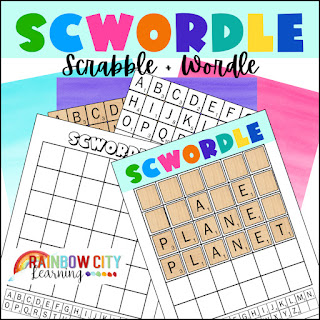
 My favorite game of the moment is Wordle. I literally can't get out of bed in the morning before I solve the Wordle of the day! In convo recently with my favorite seven year old, she said that she’d like to play Wordle, like the grownups do. That put my teacher brain in motion, and this is what I came up with: Scwordle! It's a combo of Wordle and Scrabble. Scwordle is a scaffoldable, challenging, multilevel and scored way for kids to play a Wordle inspired game using their spelling lists, vocabulary practice words, word wall words, words associated with a class novel or shared informational article, or words of their own choosing. Kids can play alone with word lists that you have suggested, or challenge their friends and classmates with word choices of their own. 

Learning to play this game will require some instruction at first, but students in grades 3-6 should be able to learn the rules quickly. Playing with partners is a great scaffolding hack! Remember that the goal of this game is to have fun with words. I promise that the learning will follow. Any changes in play that you and your students agree on are acceptable! If you try this board game version of Wordle, I promise that it will become the new favorite in your classroom. Playing this version has made me a much better online player too!

A final note about game-playing in class: Try setting up a game creation center in your class with some simple materials, such as cardstock, markers, dice, playing cards, bingo chips, spinners, and player pieces from discarded board games like Monopoly. You will be amazed at the games that your students produce to reinforce concepts they are learning in your classroom!

You can find my new Scwordle game here. I recommend making an extra set to play at home! Make it part of your New Year's Eve celebration!


Happy New Year, and best wishes for lots of game-playing fun and learning in the year ahead!


For more holiday season ideas, please check out the fabulous bloggers of Teacher Talk! 

If you would also like to be a part of Teacher Talk, we are a group of teacher bloggers who share posts
that are heavy on the ideas with just a little selling of our educational materials at    TeachersPayTeachers.com.  For more information about joining The Best of Teacher Entrepreneurs Marketing Cooperative, go to https://bit.ly/3o7D1Dv.  Feel free to email me at retta.london@gmail.com if you have any questions. 

You are invited to the Inlinkz link party!

Click here to enter
0

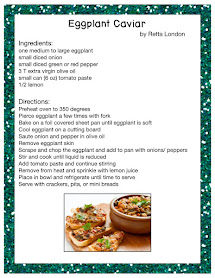
Recipes for the Holiday Season


My family is taking another break this year from our annual Thanksgiving reunion. The pandemic sidetracked our celebration, and this year we just couldn't get it together in time. No recipes were needed for this particular holiday, as we had it catered in a hotel ballroom in the town where we all grew up. We will be Zooming for another year, and hubby and I are planning what to cook for just the two of us. 

My insomnia, aided by the helpful blog fairies, has my brain spinning this morning with recipes of all sorts: recipes for each of the upcoming holidays this year, recipes for self care, and recipes for a happy and successful classroom. I'm also in search today of ingredients for my newest kitchen passion, Korean cooking. Looking for bean paste and chili crisps for some culinary fun before turkey prep begins in earnest!

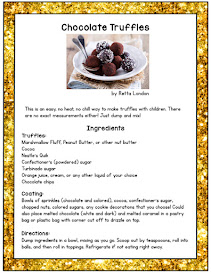
I love love love to cook! Adding that as a fun ingredient used to be an integral part of my classroom. The rise of peanut allergies and warnings about viruses put an end to that. Any good cook knows that ingredients can be subbed out and that recipes can still be shared with students and their families to be tried at home. I coauthored a book with my forever friend Fay, and we used to cook up a storm in sessions at conferences. Our lesson plan recipes  combined Science, Technology, Reading, Engineering, Art, and Math long before anyone had ever heard of STEM, STEAM, or STREAM! Maybe you attended one of our packed sessions! It was a fun time! 

Here are a few recipes to get you through the holiday season with your energy, humor, and love of family and teaching intact!

A recipe for teacher self care:
  • Gather up a few hobbies or things that you just enjoy doing, and deliberately put them into your schedule. I would choose reading and knitting. give them a value of one hour or 30 minutes each day, and make them as important as a doctor's appointment. They ARE as important!
  • Spend some time with friends. Lunch or coffee, shopping, long walks,  whatever you enjoy doing together. Again, give it a spot on the schedule and honor its value.
  • Add a new practice to your self-care routine: yoga, meditation, bubble baths, audiobooks or podcasts. Find a quiet, inward-facing thing that you like to do.
Some recipes to use this holiday season:


A recipe for a Calm and Successful Classroom:

Try these resources from Rainbow City Learning.

ZEN CLASSROOM              

Wishing you a peaceful, calm, and fun holiday season! 


For more November ideas, please check out the fabulous bloggers of Teacher Talk! 

If you would also like to be a part of Teacher Talk, we are a group of teacher bloggers who share posts
that are heavy on the ideas with just a little selling of our educational materials at    TeachersPayTeachers.com.  For more information about joining The Best of Teacher Entrepreneurs Marketing Cooperative, go to https://bit.ly/3o7D1Dv.  Feel free to email me at retta.london@gmail.com if you have any questions. 

You are invited to the Inlinkz link party!

Click here to enter
2

I'm So Glad I Live in a World Where There Are Octobers

"I'm so glad I live in a world where there are Octobers." (Lucy Maud Montgomery in Anne of Green Gables) A longish title for a blog post, and yet a perfect thought to begin each day in October. To Anne, October is a clear message from nature that things change, and change is a good thing. Your new-in-August-or-September class should just be settling into routines by now and realizing that every day brings new adventures in learning. Maybe you have changed grades, or subject focus, or schools. This year, in any case, should be an adventure in building relationships with your students. Even a looping class shows up on the first day very different than they were when they left for summer break. We change every day as long as we keep living.

What does October make you think of? Pumpkin spice everything? As a non-fan of pumpkin spice, I am always up for other new flavors from my favorite coffee place. The caramel apple one called to me this month, although I have pretty quickly returned to almond milk flat white. Decaf. I'm much too exciting already for caffeine. In my part of the country, October never disappoints with the fiery displays of color from trees all around my community. And best of all? The mosquitoes are gone. I know many of your students have Halloween and the planning of their costumes on their minds. You might even be planning your own costume and those of your family.

October is a cozy kind of month to me. I dream of long lazy stretches of time, knitting and reading. I can still walk outdoors, but the time spent inside when I return is much more enticing. This October, I have a fresh new novel from each of several of my favorite authors to explore: Jodi Picoult, Ellen Hilderbrand, Jamie Ford, Celeste Ng, and Colleen Hoover. Here's a list of new books for middle grades that you might want to explore as you have reading conferences with your students this fall. 

Nothing suggests fall coziness in the classroom more to me than a read-aloud. In my opinion, kids are never too young or too old for a good read-aloud. For October, I recommend Anne of Green Gables and the more contemporary Each Little Bird That Sings by Deborah Wiles. Comfort Snowberger  is a character that your students and you will not forget. 

Some suggestions to try out in your classroom before October ends, and to continue into the rest of Autumn:

Around the Campfire

Try this idea for Morning Meeting, Read-aloud time, Author's Chair, or Poetry Share. Build a "campfire" on a paper plate base from empty toilet paper or paper towel rolls and crumpled tissue paper. Sit in a circle around it. Students could have their own individual "logs" to add to the fire when they add a reading of their own work or when they add an observation, compliment, or suggestion to the conversation. I purchased an electric "campfire" from a local  fireplace shop, but here's a picture of one that you could easily build:


October Stations

Stations Day was always a time my students looked forward to. As a fourth grade team, we had a stations day each week, with a special one each month. Of course, our October Stations addressed our curriculum standards, but with a focus on Fall. Try a liquid measurement station with apple cider as the liquid. Try a STEM/STEAM activity using miniature candies like the one found here. For Halloween-focused stations during Halloween week, don't miss this bundle from Rainbow City Learning!


Stations are much like Centers, but with the addition of volunteer helpers at each Station. I like using parent or community volunteers to run the Stations, but older students from other classrooms can also do a great job. Volunteers help when supply management is a little more challenging. 


Explore Change as a Theme

It's been said that the only one who actually likes change is a baby with a soiled diaper. I disagree. IMO we all can learn to embrace change. Change means that we are growing and learning and becoming (hopefully) better versions of ourselves. There are so many ways to focus on change in your classroom. Explore the states of matter, chemical and physical change, and the way characters change from beginning to end of a book/story. Look at the ways other characters become a force for change to the main character. Begin to look at the changes each of us goes through during the school year. We are like beautiful butterflies, emerging from a gloppy pile inside the chrysalis. Journals, time capsules, and portfolio collections can help us to save and savor the beauty of change. 

This resource can help your students to document and then look back on the changes they see in themselves during the year. 


I hope you'll use the rest of your October to lead your students on their journey to embracing change. Introduce them to new scientists, authors, artists, and poets this month! And introduce them to my actual favorite quote from Anne of Green Gables: "The world calls them its singers and poets and artists and storytellers; but they are just people who have never forgotten the way to fairyland." 

My wish for you is that you never forget the way to fairyland. Just as working with young people all day will keep you young, remembering the way inside your own imagination will accomplish that as well. I'm so glad I live in a world where there are teachers like you!


For more October teaching inspiration, be sure to take at look at some of the posts below. If you are a blogger and interested in joining Teacher Talk, please contact me at retta.london@gmail.com and I'll explain how to get started!

You are invited to the Inlinkz link party!

Click here to enter
0