Box 1

Box 1
STEAM

Box 2

Box 2
Character Education

Box 3

Box 3
Digital Learning
Showing posts with label Culturally Responsive Teaching. Show all posts

Games in the Classroom

Here we are, right in the middle of holiday prep, and looking forward to celebrating New Year's Eve! When my daughters were young and still celebrating New Year's Eve at home with us, I planned a menu of appetizers only along with Shirley Temple cocktails, starting at 3 pm and extending until we carried the little partiers off to bed. Generally, we "dropped the ball" (in our imaginations) around 10 pm. Between 3 and 10, we had a conga line once per hour and danced all through our house, a family tradition started long ago in the house where I grew up. We also played games while we munched on our tiny plates of apps. 

We went through almost every game in the house on those New Year's Eves, but spent the most time on Monopoly and Scrabble, our all-time favorites. We were expanding our language skills and sharpening our economic understandings without even realizing that was happening. We were interacting with each other, laughing together, and totally enjoying every minute of the celebration. If you have young children at home this holiday season, I can't recommend New Year's Eve Game Night highly enough! So many precious memories were made on those nights together!

Game playing holds as much magic in the classroom as it does at home. Games can be used to introduce new lessons, review and reinforce concepts already learned, and to develop skills such as problem-solving, critical thinking, and teamwork. My first experience with game playing in the classroom started when I was in Miss Brooke's fifth grade class. Miss Brooke had many games available to us in her games center, but my favorite was a bulletin board US map, where a blue light bulb would light up when you touched wires matching the state outline with its name. The learning I acquired there is still with me today. Go ahead, show me any state outline and I'll name that state! 

I carried Miss Brooke's torch and love for games into my own classrooms throughout my teaching career. In the early years, I made card games for vocabulary and math practice and stored them in empty Pringle's potato chip cans. I created board games for every Social Studies unit and dice games for reading. 
It's so easy to incorporate game playing into your teaching practices. I developed a review game with my students when the game show "Are You Smarter than a Fifth Grader" was on TV. Everyone watched it. It was part of the culture of our community. What fun to see fifth graders triumph over grownups! It showed that kids are smart, they pay attention, and have a lot of knowledge to share. I made a fairly simple power point with a slide for each subject and then inserted a question from a lesson we had learned that week. The question slide was linked to an answer slide. Three of my class jobs involved being the "Game Show Host", "Technician", and "Awards Committee". The whole class played every Friday in the time slot before lunch. Because what are you going to do then anyway, right? The host read the question as it appeared on the screen. The technician played a song loop on on our boom box. (Subliminal messaging works great here. The song we used for our peppy thinking music was "It Takes All Kinds of People" from Thanks and Giving by Marlo Thomas and friends. It took me forever to find this now long hidden gem on the internet, so I am linking it here for you. You're welcome! Make it your favorite ear worm. I can still hear it right now!) While the music played, kids wrote their answers on individual white boards (or laminated white card stock) with a wipe off crayon or marker. Each student kept an old sock in their desk to erase with. When the music stopped and the host said, "Show me!", each student held up his/her answer. Everyone with the correct answer received five rainbow city dollars. (Class Economy secrets here.) This simple review game became part of our class culture for years after the TV show failed. It was simply "what we do here" to remember and celebrate what we've learned and to get ready for tests.


SCOOT games are another way to introduce or reinforce learning in a responsive way. Kids need to move! This game approach gets them up and moving. An important piece of SCOOT gaming, though, is the followup. It's important to give students time for debriefing and a little conversation with their peers. As they present their responses, watch their learning success soar! Look here for a little SCOOT inspiration!

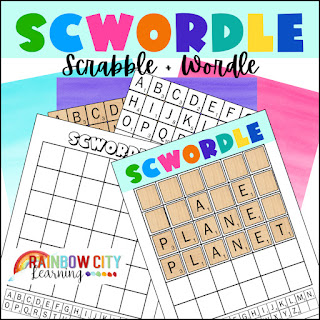
 My favorite game of the moment is Wordle. I literally can't get out of bed in the morning before I solve the Wordle of the day! In convo recently with my favorite seven year old, she said that she’d like to play Wordle, like the grownups do. That put my teacher brain in motion, and this is what I came up with: Scwordle! It's a combo of Wordle and Scrabble. Scwordle is a scaffoldable, challenging, multilevel and scored way for kids to play a Wordle inspired game using their spelling lists, vocabulary practice words, word wall words, words associated with a class novel or shared informational article, or words of their own choosing. Kids can play alone with word lists that you have suggested, or challenge their friends and classmates with word choices of their own. 

Learning to play this game will require some instruction at first, but students in grades 3-6 should be able to learn the rules quickly. Playing with partners is a great scaffolding hack! Remember that the goal of this game is to have fun with words. I promise that the learning will follow. Any changes in play that you and your students agree on are acceptable! If you try this board game version of Wordle, I promise that it will become the new favorite in your classroom. Playing this version has made me a much better online player too!

A final note about game-playing in class: Try setting up a game creation center in your class with some simple materials, such as cardstock, markers, dice, playing cards, bingo chips, spinners, and player pieces from discarded board games like Monopoly. You will be amazed at the games that your students produce to reinforce concepts they are learning in your classroom!

You can find my new Scwordle game here. I recommend making an extra set to play at home! Make it part of your New Year's Eve celebration!


Happy New Year, and best wishes for lots of game-playing fun and learning in the year ahead!


For more holiday season ideas, please check out the fabulous bloggers of Teacher Talk! 

If you would also like to be a part of Teacher Talk, we are a group of teacher bloggers who share posts
that are heavy on the ideas with just a little selling of our educational materials at    TeachersPayTeachers.com.  For more information about joining The Best of Teacher Entrepreneurs Marketing Cooperative, go to https://bit.ly/3o7D1Dv.  Feel free to email me at retta.london@gmail.com if you have any questions. 

You are invited to the Inlinkz link party!

Click here to enter
0

Greet Students With the Arts

 Yeah, I spend way too much time on Facebook. It's hard to resist especially during this past year apart. All my friends are in there! I can pick up my phone or iPad, or turn on the computer, and find family and friends right there. I can interact a little, feel comforted, and step away. (Well, most of the time I can step away!) It has definitely become more of an addiction during the past year though.

During one of my recent forays into Facebook, I ran across an open post from a former school superintendent. Her name is Teresa Thayer Snyder, and she is the former superintendent of Voorheesville School District in New York. Dr. Snyder had some excellent advice for our return to school, originally posted on her own Facebook page, but currently spread far and wide all over the internet. Dr. Snyder is a fierce opponent of the catch them up and test them philosophy. Rather, she asks teachers to welcome their students back with art supplies and writing materials, with music and dance, with every avenue of the arts that will help the children to tell their stories, to enter into the historical record the many ways in which the past year has changed their lives. 

Dr. Snyder is a woman of my own heart. Exactly the way my classroom ran for thirty six years. Welcome them in with a love of the arts, and make sure that they have every opportunity to tell their stories. I've blogged about all this before, and will include a roundup of those posts at the end of this post. Never has there been a more important time to be soft and comforting with kids, to allow all the time in the world for them to get acclimated to school in person again, and to encourage them to tell their personal stories. 

On a personal note myself, a former student who was going through some life issues recently asked me if I could just pull something out of the closet in Rainbow City (what we called our classroom) to make it better. Thinking back on what I might have pulled out all those years ago, I'm pretty sure that it was as simple as some art supplies, writing materials, and maybe a little background music. (And, oh yeah, glitter. If you truly know me...) Stir these ingredients gently and add a dash of time, and you just might be able to help your individual students to heal from our shared trauma. When I'm trying to heal myself these days at home, that's just what I do - head to my art room. (The children have grown and are gone, so their rooms can be whatever now.) Once inside my art room, I pull out the journals, paints, brushes, and glitter and turn on the soft rock station. Might even dance a little. No one's watching. I promise you that it's much more healing than cramming for a test.

School districts now are actually considering ditching the standardized tests. I hope that for each of you, that comes to be, and I hope that you will be planning some art-infused activities to gently return to learning while honoring what your students have been through. 

You might start with a "Bucketful of Shivers" activity as detailed in this post. Simply, this activity gives kids a chance to throw away some negative thoughts and to start banking some positive thoughts. We all need a bank of positive thoughts to drown out the negative when we encounter those. Pretty easy to make buckets out of construction paper and pretty easy for kids to decorate them with crayons or markers!

You can find a lesson on creating a memory box and filling it with a special moment story in this post. This is a private way for students to write about a special memory with a loved one. Stories can be about a grandparent that they might not have seen for awhile, or could be a private way to remember and honor a family member that they may have lost. 

How about dancing in a storm in your dress clothes? Remember dress up clothes? I hear they'll be replacing our sweat pants soon. Hope some of mine still fit. 😂 Why not put on some music with a prompt to dance right at your socially distanced desk, imagining a certain situation, like wearing your pajamas in a softly falling snow, or wearing a tee shirt and shorts as you sink your toes into the sand at the beach? Wearing your ski clothes and trying to dance on a merry go round. Your kids can come up with much better prompts, I'm sure! Here's a post about a free lesson to get the fearless learning ahead started! I would absolutely do this dancing in a storm in your best clothes thing the very first day back! 

I wrote a post in June of 2020 after reading Glennon Doyle's book Untamed. Lots to think about "burning it down" with regard to how we used to teach and finding freedom in teaching in new ways. We are forever changed by what we have all been through during the pandemic year. All of us. Teachers, families, children. What a perfect time to let go of the past and move forward in a way that fits who we are now. Here's my take on Untamed Teachers.

Try some letter writing. Step away from the screens. Let your kids decorate the stationery and write the letters in their own handwriting. Letters to themselves during the last normal school year that they had, and letters as you go through the year to their future selves. Find a lesson on reaching out to future selves here.

Bring in a bagful or bucket of rocks and break out some paint. Let your students spread some positive words for others in your school by painting and spreading rocks at the entrance. Find a post about sharing our One Heart here.

Click here for a post about the need to give students the time and space to tell their stories.

And finally (for this post anyway), find a plan for using the arts mixed with literature to teach perseverance.

I would love love love to hear about an activity that you are using to welcome your students back that integrates the arts! Tell me please in the comment section below! 


For more thoughts on teaching in March and April, don't miss the following posts by the members of Teacher Talk! If you would also like to be a part of Teacher Talk, we are a group of teacher bloggers who share posts that are heavy on the ideas with just a little selling of our educational materials at TeachersPayTeachers.com.  For more information about joining The Best of Teacher Entrepreneurs Marketing Cooperative, go to https://bit.ly/3o7D1Dv.  Feel free to email me at retta.london@gmail.com if you have any questions. 


If you are so kind as to comment on my post, please know that all comments are monitored and will be posted when approved. (You may not see your comment right away after you post!)


You are invited to the Inlinkz link party!

Click here to enter
1

Telling Our Stories


Who tells your story? Your parents tell it back to you at first, all the tender and embarrassing moments that you were too young to place into accessible memory at the time.  For most of your life, you tell your own
stories: to new and old friends, sometimes to strangers, to those who already love you or who may be falling in love with you, to your own children and grandchildren. After you are gone, your stories are held by those who knew you best: siblings, children, grandchildren, friends, former students, and former colleagues. If you have kept and left diaries, generations to follow in your family will come to know you as if you walked the earth together. If you become famous your lifetime, future biographers will tell their own versions of your story.

Eliza Hamilton tells us Alexander's story, as well as her own, in the Lin-Manuel Miranda song from the play "Hamilton". I know you've been singing or humming it to yourself since the first line of this post. Right? Eliza asks us, "And when you're gone, who remembers your name? Who keeps your flame? Who tells your story?" She also tells us, "I put myself back in the narrative." That line turns our teacher brain right away to personal narratives, often the first writing genre we try to teach, drawing from personal experiences, the stories our students love to tell. They love to tell their stories orally, yet are often more reluctant to start writing them down. We all know the experience: a flurry of raised hands, one child is recognized to speak, and the response begins, "Once....." Uh oh, not an actual answer, but a story. What do you do? Honor the need to tell our stories, or try to swing the focus back to the standard that must be taught in that 40 minute block? Not an easy choice, yet one that each of us makes several times at least every day. I have been guilty so many times of not only telling my own stories, but of allowing more than one student to get personal with their responses. The challenge to me as an educator was always how to draw the connecting lines so that the time spent will be meaningful in advancing the lesson for all.

Teacher Takeaways

I've been spending way too much time on ZOOM lately, and I don't have a class of students to meet with. Two ZOOM meetings and a Facebook Live each day for three days in a row this week made me feel your pain even more strongly, teachers. I applaud you and pray for you. One of my Zoom calls this week was a meeting of the three congregations affected by the Tree of Life mass murders two years ago. They were meeting to discuss a new book filled with narratives written by those who were either directly involved, or were close to the area or to the victims of the tragedy. My uncle is a survivor of that horrific attack. He deals with the after effects every day, and when he told me about the book and the meeting, I asked if I could attend. The book is Bound in the Bond of Life: Pittsburgh Writers Reflect on the Tree of Life Tragedy, edited by Beth Kissileff and Eric Lidji.

I was drawn to this topic at first because of my family's connection, but as I looked inside the book, I noticed that one of the writers had once, long ago, been a third grade student in my classroom. Of course I wanted to see how his writing had improved since third grade! I ordered the book on the spot! Listening to the writers as they read and discussed excerpts from the book, there were so many teacher takeaways. Two takeaways stood out from all the rest to me as a teacher. Neither was new to me, yet their importance surged in my mind, given our current situation in this age of the pandemic. One is the cathartic nature of just being able to tell your stories. The second is the way the same story is different when told by different people. Each of these, I believe, is important enough to make telling our stories a vital part of our teaching practice this year.

A Catharsis

Kids need to tell their stories. It's a release and a relief. Emotions are running strong right now for all of us. Stuffing our feelings deep inside isn't healthy, and storytelling can be a release. Kids need to be scaffolded into this practice. Start by honoring those responses that start with, "Once...". Plan for lots of short story responses in your morning meetings, and in the first moments of your lessons. Don't let the pandemic and our "new normal" be an elephant in the room beyond the screen. Bring it forward and encourage your students to talk about it. Becoming comfortable with talking about it can become a comfort with writing about it.

Text to Self becomes Text to World

Beginning with these mini oral histories and moving to journal entries, you are well on the way to longer, more traditional personal narratives. As kids start writing in journals, we need to be accepting of short answers as well as longer ones. A good way to ease reluctant writers into the practice is to allow drawing, diagramming, and even stickers to help fill the page at first. Most kids enjoy sharing their journal entries aloud. I wouldn't require it, but gently encourage it whether in small focus groups or with the class as a whole. An online bulletin board would be a great way to anonymously share some journal entries with the rest of the class. 

As you begin to teach personal narrative writing, journal entries that your students have been collecting are a gold mine of topics and prompts for writing. Kids can mark pages that they choose for future narratives with yarn, ribbons, string, sticky notes, or stickers that extend beyond  the page.. (Try sticking a second sticker to the back of the extended sticker to make it a little more long-lasting.) If you are collecting journal entries to show growth through the year as writers, journal entries paint a pretty accurate picture.

As I mentioned in my second takeaway above, writing about the same topic or event will look very different and unique from writer to writer. Many interesting and valuable lessons for writing can be drawn from this. Point of view, compare-contrast, even the basic elements of introduction, plot, characters, problem, and resolution will look different from student to student. The global lesson from this may be that it indeed matters very much who tells our stories.

I started a list of discussion/writing prompts to get you going, if you'd like to explore this more with your students. Just click below, and it's yours! (Background by Workman's Wonders on TpT)


For more ideas for moving from storytelling to journals to personal narrative writing, I hope you'll take a look at some of these classroom-tested resources from Rainbow City Learning! Just click here for the "Telling Our Stories" resource group.

Whatever your story, I wish you peace n the days ahead. Be well.


For more teaching inspiration for November/December, check out the amazing Teacher Talk blogs below. If you would also like to be a part of Teacher Talk, we are a group of teacher bloggers who share posts that are heavy on the ideas with just a little selling of our educational materials at TeachersPayTeachers.com.  For more information about joining The Best of Teacher Entrepreneurs Marketing Cooperative, go to https://bit.ly/3o7D1Dv.  Feel free to email me at retta.london@gmail.com if you have any questions. 


You are invited to the Inlinkz link party!

Click here to enter
2

Enough


Our family has a reunion every year at Thanksgiving time. We are scattered all over the country (actually all over the world) now, but each year as many as possible try to meet up for a banquet cooked by professional chefs (yay!) rather than by any of us. We meet in a hotel back where I grew up and spend several days just enjoying each other and loving on our newest generation. It takes me back to my childhood, when most of the meals were home cooked, certainly at Thanksgiving, and when most of my extended family hung out together all the time. We were there for so many of the milestones in each other's lives, sometimes because they were official and came with an invitation, and sometimes because we just happened to all be there. We were all always there, either at my parents' house, or my grandparents' house, known simply as "down the house" (In Pittsburghese, "You goin' dahn the hause?" Or, "See ya later dahn the hause." We never said yinz in our family, but we sure pronounced words like dahn and hause just that way. It brings a tear. Sigh.

Our Thanksgiving celebrations through the years always included the long table for adults and the kids' table. I believe I sat at the kids' table until I graduated from college and was married with a tiny apartment table of my own. It was a good place to be, and a great place to grow up.

We hosted a brunch at our house today, and my favorite grandson (aka only grandson) asked if we could move the kids' table to the end of the adult table so that it would be just one long table and we all could sit together. What a brilliant idea! I wish I had thought to ask my grandmother the same question. Her kids' table was seriously all the way in the living room. We always felt that we were missing something over there! Brunch was so much fun today, and the furniture arrangement just might have had something to do with it!

Thoughts of Thanksgivings past and future also brought me to the thoughts of the season of excess, which seems to start earlier and earlier each year. I thought I had finished all of my holiday shopping yesterday, but thought of several items that I wanted to add today. A tiny voice in my head said, "Enough!" The voice was right. I took some time tonight to think of all the things that I have enough of. I certainly have enough clothes to last forever. Six bags are ready for donation right now. I have a precious family to love, and I know they love me, so enough love. I have probably far more friends than any one person deserves, so enough friendship. Although I've had a couple of health related scares this year, I am mostly blessed with good health. I do request that you stay away from me though if you have not had your flu shot. Learned that the hard way. Enough food? Probably too much, given my never-ending struggles with the scale.

Yes, enough. I am so sure that I have enough that I have no holiday wish list of my own. The fifty or so days ahead might just be a good time to consider with your students and children or grandchildren, nieces, and nephews - whoever is important in your life - what exactly each of you has enough of. And then, you might want to extend the conversation to ways you can reach out and share with others who might not have enough. Some examples (some that I've talked about in previous blog posts) might be:

  • Adopt a family to gather and wrap holiday gifts for.
  • Pack winter comfort bags for the homeless.
  • Visit an elderly residence and play board games or sing. 
  • Plan an act of kindness to do every day (or even once a week) for someone else.
  • Share your holiday spirit by learning more about winter holidays celebrated by others in your community and around the world.
An amazing book that I've just discovered is I am Enough by Grace Byers. It is a lovely way to remind our children that each of them is a precious gift to the world.

For resources to make your teaching life a little easier in the days ahead, and to learn about winter holidays celebrated by others, click here! Winter Holidays with Rainbow City Learning
For resources to emphasize Gratitude, click here! Celebrating Gratitude with Rainbow City Learning

In the days ahead, I wish you a seat at the table surrounded by those you love, and the most precious of gifts to open: friendship, caring, and awareness of the needs of others.


For more November thoughts and tips, be sure to check out the posts of my blogging friends.


You are invited to the Inlinkz link party!
Click here to enter
3

Fearless Learning Free Lesson


"Catch me!" my three year old granddaughter screamed as she jumped into the swimming pool, knowing all along that someone would surely be there to catch her. She was never wrong! My eight year old grandson, along for the bike ride to encourage me as I relearn a long forgotten skill, takes his hands off the handlebars and gleefully coasts on the downhill as I pump the hand brakes and pray that I stay upright. We are all born with that fearless learning gene. I'm currently reaching back and searching to reclaim mine.

Taylor Swift has a song. Fearless. "Dance in a storm with my best dress.." kind of fearless. Hands off the handlebars fearless. Jump in the deep end fearless. We are born with it, and many of your students still have that fearless gene. Why not celebrate it, maximize it, and make it work for learning in your classroom this year? Call it Growth Mindset if you wish, but fearless learning has been present in the universe since the beginning of time. It's who we are at our core.

Lessia Bonn (I Am Bullyproof Music) has a song called Fearless also. Written long before Taylor Swift's song, Lessia's "Fearless" was an integral part of my classroom practice from the day I discovered it. I worked on some (IMO) pretty amazing learning units with Lessia for a couple of years, based on her music. Using the Bullyproof songs brought so much magic to my learning community during my last few years in the classroom. Here's a video made by my Rainbow City kids during that time. All about what being Fearless means to them - in life, in relationships, in learning.

Denise Brennan-Nelson wrote a sweet little book called Willow. Willow is a fearless artist, drawing and painting whatever her heart tells her to create. Her teacher, Miss Hawthorn, seems to have lost her own inner artist. She likes her apples round and red, and her trees tall and green with brown trunks. Miss Hawthorn likes a clean and tidy art room, with very specific uses for her materials and very specific responses to her lessons. Enter Willow, a student and artist who teaches Miss Hawthorn a thing or two about art and life and fearless learning. Miss Hawthorn is able to reach back and recapture her own true inner artist. I have a lesson on this book in this Bullyproof Rainbow unit.
Sharing part of it here with you for FREE! I hope you'll enjoy using it and remember to return to the download page and leave some awesome feedback! As always, I would love to see pictures (and even videos) of your students' responses to this lesson!

Hope you'll check out this blog post on Using the Arts to Teach Perseverance!


Click on the image for your freebie!


0

Culturally Responsive Teaching


As a young teacher, immersed in a culture unlike the one I grew up in, I learned to dance like the Jackson Five (or at least like Michael and Janet), I learned to jump rope double dutch and recite all the rhymes that usually were a part of that, I knocked on doors of my students' homes and invited myself in to chat and have a cup of tea or whatever that family enjoyed having a conversation over. I had never heard of culturally responsive teaching, and yet my teaching spirit guides were whispering in my ear 24/7 about the need to make that class a community and to build relationships before the teaching and learning could begin.

As my career path led me to a situation where the dominant culture of the school was in theory more like my own, I still had to struggle to learn the traditions and practices of that group. In this school which I had assumed was of my own religion, the boys and girls did not sit together during prayers. As the girls disappeared behind a curtain during morning prayers, and as I tried to get my new charges to return to sit "with their class" (my cultural understanding as a trained teacher), I soon heard the voices of my teaching spirit guides once again, "Not how we do things here."


As the third season of my teaching career got underway, happily immersed in a neighborhood school right where I was raising my own children, I still listened to those teaching spirit guides telling me that there were many surprises on the horizon, and that community building and relationships should take first place way ahead of the curriculum. Rainbow City as a learning community was born in that school. Planned, named, and put into practice by my students. It became our shared culture.

I was sometimes accused by colleagues of being all fluff and glitter, but every "fluffy" activity that I planned, every long and personal story that I shared, every time I stopped everything so that a student could share a similarly long and highly personal story contributed to my success as an educator and my students' successes as learners and citizens. Our learning experiences made a light sent out to shine into the future. Say it loud. I'm fluffy and proud! This "fluff and glitter" approach gave my students and me a chance to tailor the learning to our prior knowledge and experiences and to build from there. I currently have many very successful adults out there in the world who give at least a portion of the credit to "What I learned in Rainbow City." Some give probably much more credit than I alone deserve, but we sure built some beautiful learning and beautiful memories together. And to any Rainbow City citizens reading this post, mwah! Kisses and hugs to each of you. My heart has followed you and celebrates your wonderful life, the choices you have made, and the lessons that you are still learning!

The spirit guides are whispering that this post is becoming just a tad fluffy and a touch too glittery, so we will move along. Culturally Responsive Teaching. Another buzzphrase. To me, culturally responsive teaching is literally just plain old Responsive Teaching. Teaching that respects and responds to the learner and gives the learner options in how to process and respond to that learning. It is and can be as simple as that, in my humble opinion. Take time to get to know your students, build relationships first, and draw on the knowledge that you have gained in this process to tailor the learning to the learner.

A wise and wonderful principal once told me that, "I like for people to do things WITH me, not TO me." as she encouraged my serving on so many district committees. The same life lesson should apply to the atmosphere in our classroom learning communities. Of course we should cover the curriculum standards. But we will do so much more than cover if we involve the students in how the lesson will be presented and how responses and assessments will happen. Teaching and learning shouldn't happen to them, rather it should happen with them.


Some easy ways to get started on creating a more responsive classroom:

 Game-playing
All kids love games. Most families play games, and every culture has certain games that are unique to its members. It's so easy to incorporate game playing into your teaching practices. I developed a review game with my students when the game show "Are You Smarter than a Fifth Grader" was on TV. Everyone watched it. It was part of the culture of our community. What fun to see fifth graders triumph over grownups! It showed that kids are smart, they pay attention, and have a lot of knowledge to share. I made a fairly simple power point with a slide for each subject and then inserted a question from a lesson we had learned that week. The question slide was linked to an answer slide. Three of my class jobs involved being the "Game Show Host", "Technician", and "Awards Committee". The whole class played every Friday in the time slot before lunch. Because what are you going to then anyway, right? The host read the question as it appeared on the screen. The technician played a song loop on on our boom box. (Subliminal messaging works great here. The song we used for our peppy thinking music was "It Takes All Kinds of People" from Thanks and Giving by Marlo Thomas and friends. It took me forever to find this now long hidden gem on the internet, so I am linking it here for you. You're welcome! Make it your favorite ear worm. I can still hear it right now!) While the music played, kids wrote their answers on individual white boards (or laminated white card stock) with a wipe off crayon or marker. Each student kept an old sock in their desk to erase with. When the music stopped and the host said, "Show me!", each student held up his/her answer. Everyone with the correct answer received five rainbow city dollars. (Class Economy secrets here.) This simple review game became part of our class culture for years after the TV show failed. It was simply "what we do here" to remember and celebrate what we've learned and to get ready for tests.

SCOOT games are another way to introduce or reinforce learning in a responsive way. Kids need to move! This game approach gets them up and moving. An important piece of SCOOT gaming, though, is the followup. It's important to give students time for debriefing and a little conversation with their peers. As they present their responses, watch their learning success soar! Look here for a little SCOOT inspiration!

 Improv

Improv (improvisation) is an effective way to get students to try on character traits from fiction or history or current events, filtered with their own cultural background. Work in small groups (I like to start with a "fishbowl" approach - everyone gathered around one small group who will demonstrate first) and give the participants each a character, a general situation from your lesson focus, a mood, and a time/place to discuss their reactions. Sit back and watch. You will learn so much about the culture of your students. The teaching elves at Rainbow City Learning are working on an improv approach to the way kids deal with natural disasters. Be sure to sign up for our mailing list when the box pops up on this blog post for a free sample when it's ready, and follow Rainbow City Learning on TpT to see when it's posted. Yeah, the teaching elves are related to the teaching spirit guides. They have some pretty good ideas. Even when they suggest the use of glitter. I listen.

 Social interaction

Humans are interactive creatures. Kids need to talk. When you encourage them to share information and responses, and to plan and execute PBL projects together, learning magic happens. Give them what my students and I called "Conversational Opportunities" as often as your own culture and sanity will allow. Let go of the reins whenever the coast is clear ahead and let the students take over. You are always there to walk around, bringing the focus back to the "I Can" statement or a piece of the lesson that you want to reinforce. Drop it casually into the conversation and let your students run with it!

 Storytelling

I'm a raving fan of the storytelling approach. To me, it's like adding honey to your tea or a sprinkle of sugar to your coffee or cocoa. Well, you get it. Is it necessary to teaching a good lesson and getting a high rating on your eval? Probably not. Your evaluator may even need a bit of coaching on how the storytelling has made you a more culturally responsive teacher. To me, good storytelling leads you into some of the best lessons you'll ever teach. Telling a little known story that you know about an historical figure, a friend who was just like that fictional character, or especially you yourself when you were their age will hook your audience , hold them in the palm of your hand as their brains open up to receive new knowledge and will (bonus!) encourage them to share some of their own stories. All storytelling does not have to be oral. You can tell your own story, finish the lesson, and send your students back to their places with a burning desire to write their own story that applies in their journal or Interactive Notebook.

 Learning that motivates students and sets their souls on fire with a passion to know more and to show what they know is culturally responsive learning. You don't have to rap the times tables or work on a secret handshake or dance on the desks to bring this to your class. You simply have to care about each student, build a relationship of respect and trust, and then take off the training wheels! The lessons will culturally tailor themselves as your students feel more a part of it all.

The more I read about culturally responsive teaching, the more I see these common threads: kids feel safe and respected in class, kids are finding motivation in learning (something in the ideas or process is holding a mirror up to each kid receiving it), attitudes begin to change around school and learning (both are seen as fun and stress free), and kids have choice in the way they respond.

A resource that brought me success in bringing this type of learning to my students is an Interactive Notebook model that we used for every subject. This is a basic tool and template that can increase the cultural responsiveness of your classroom. We built each notebook together as we responded to the specific lessons that we were required to learn. Each student's notebook was unique to that student, and it became the ultimate test study guide. No textbook or tedious study guide needed to accompany it.  Fluff and glitter? Try it out and you tell me!


For more January ideas, please visit the amazing blogs of Teacher Talk. If you'd like to join us as a blogger, contact me before linking up!


3